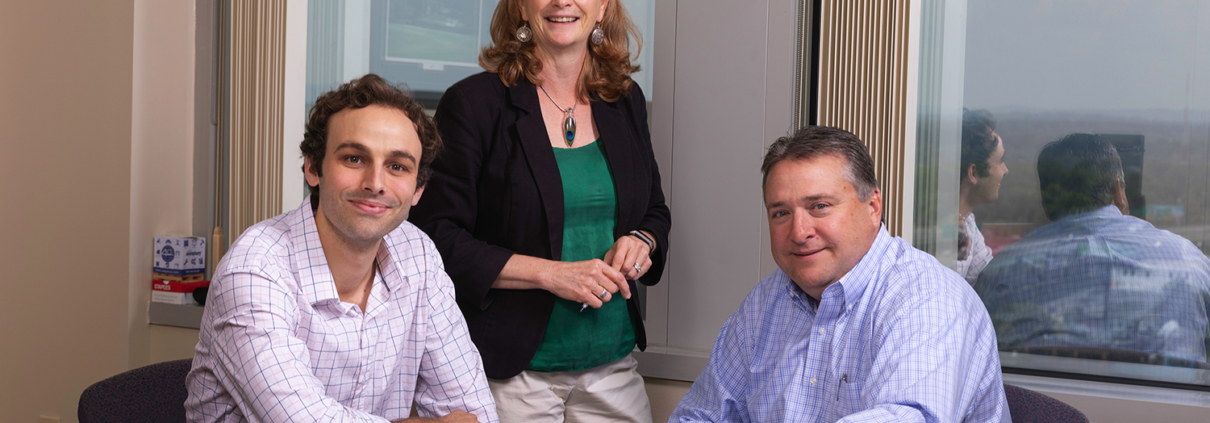
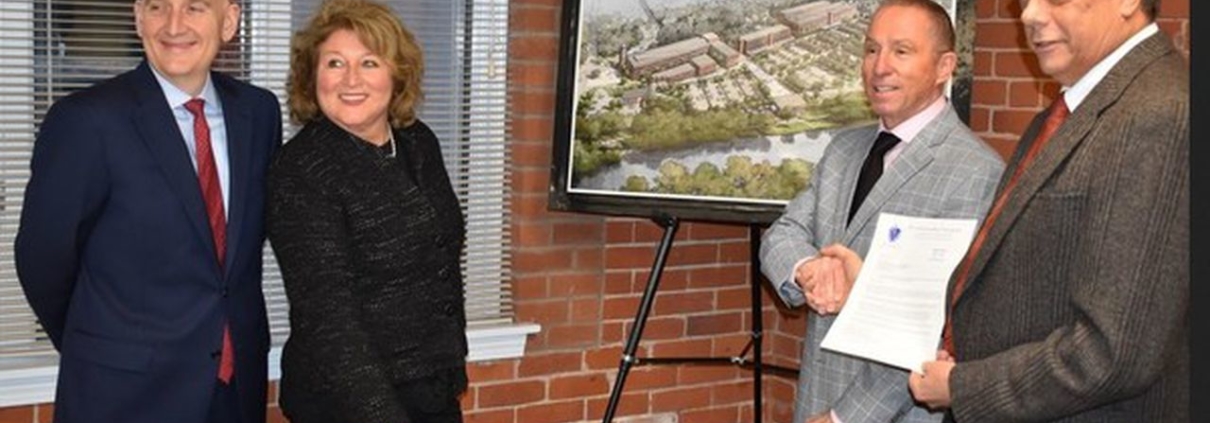
Secretary of Housing and Livable Communities, Ed Augustus, visits the Ludlow Mills

Westmass extends its gratitude to Secretary of Housing and Livable Communities, Ed Augustus, for his visit to the Ludlow Mills yesterday, recognizing his unwavering dedication in addressing Massachusetts’ housing challenges. Secretary Augustus had the opportunity to witness firsthand the progress of the Ludlow Mills Redevelopment project, including the successful completion of Mill 10, ongoing development at Mill 8 (pictured here), and the promising future plans for Mill 11. His support in converting historic mill properties into housing showcases a deep commitment to preserving the state’s rich heritage while addressing the critical need for affordable and accessible housing.

Secretary of Housing and Livable Communities, Ed Augustus, visits the Ludlow Mills on July 13, 2023. Pictured left to right are Dana Angelo (Vice President of Development, WinnDevelopment), Jeff Daley (President/CEO, Westmass), Ed Augustus, and Larry Curtis (President, WinnDevelopment)

Westmass has been selected by the EPA for a 2023 Brownfields Cleanup Grant

EPA (May 25, 2023)

The federal Environmental Protection Agency (EPA) has selected Westmass Area Development Corporation for a Brownfields Cleanup Grant that will be funded by the Bipartisan Infrastructure Law. Grant funds will be used to clean up the 300 Series Warehouse Buildings and Mill Buildings 46 and 58, which are part of the 52-acre Ludlow Mills Complex at 100 State Street in the Town of Ludlow. The 300 Series Warehouse Buildings were used to store manufactured jute before it was shipped off the property and are currently vacant except for the first floor. Mill Buildings 46 and 58 were used to house locomotive engines and as a machine and maintenance shop supporting the historic rail system within the complex and are currently vacant.

300 Series Warehouse

Buildings 46 & 58

As part of this cleanup project, the buildings will be abated of all asbestos containing materials (ACM) and other hazardous materials. Grant funds also will be used to conduct community outreach and engagement activities including the development of a Community Involvement Plan.

More: EPA

Baystate Health taps a developer to advance possible reuse of shuttered Ware hospital

MassLive (March 27, 2023)

Jim Kinney | jkinny@repub.com

WARE – The future of a landmark property in Ware is a little clearer.

A regional developer has been tapped to help Baystate Health Systems think through possible reuse of the former Baystate Mary Lane Hospital property at 85 South St.

The move comes as the town itself begins to solicit public opinion on redevelopment of the site.

Westmass Area Development Corp. will work with Baystate to decommission the old hospital.

“I think Westmass would have an interest in redeveloping it,” said Jeff Daley, the group’s president and CEO. “What they need is speculative at this point. As of now, it’s a little early to tell.”

The town, meantime, hired HKT Architects of Charlestown with a $70,000 state grant to prepare conceptual drawings, do engineering work and host public meetings about the potential reuse of the site, said Stuart Beckley, the Ware town manager. The meetings will begin in May. No dates have been set.

“It’s right next to a new senior housing complex,” Beckley said. “It would be great for mixed-use, housing, recreational fields.

At 21 acres, the property slopes down from busy South Street to the banks of the Ware River. It has five buildings, the largest of which is 131,000 square feet. The oldest parts of the complex date back to about 1914, according to town records. The town has it assessed at $12 million.

Baystate Health announced in January 2021 its planned to close Mary Lane – which by then was an outpatient center only, saying at the time the complex needed about $5 million in upgrades.

Baystate closed inpatient units at Mary Lane in 2016. Baystate bought former competitor Wing Memorial Hospital from the UMass Memorial Medical Center in Worcester in 2013.

Baystate said just 28 patients per day were seeking care at Mary Lane’s emergency room. And of those, over 85 percent arrived with minor, non-urgent conditions that could be treated in a primary care setting

In 2021, Baystate had about 80 employees at Mary Lane. They all had the opportunity to get new positions within the 12,000-person Baystate workforce.

The shutdown was to happen over two years, with the emergency room the first to go dark. That happened in June 2021. Baystate shifted most patients and services to Baystate Wing in Palmer, nine miles away.

Oncology was relocated to the D’Amour Center for Cancer Care in Springfield.

As of Monday, Baystate said it has just a few departments with offices on the Mary Lane site: radiology, a laboratory and obstetrics and gynecology.

Daley said Baystate is building out new offices for those departments at Wing and they should all move by the end of this year.

In a news release Monday, Baystate said it and Westmass have told the town their timelines for abatement work in some of the vacant buildings — and will submit a permit later this month for the demolition of some buildings.

The demolition permit process in the town of Ware can take up to nine months for final approval, so demolition probably wouldn’t happen before early 2024.

But not all the buildings may be demolished, Daley said.

“We are looking at adaptive reuse,” he said. “If there is a way to reuse these buildings in a new development, we will.”

It’s similar, Daley said, to Ludlow Mills, Westmass Development Corp.’s $140-million-plus ongoing redevelopment of a 130-acre industrial site with 50 historic mill buildings totaling 1.1 million square feet of space.

“We are there (in Ludlow) abating hazards and demolishing unusable buildings while doing adaptive reuse,” Daley said. “I think there is an opportunity. … Ware is a small community. But there is an opportunity to do something nice.”

More: MassLive

Westmass hires Sean O’Donnell as its new Community Development & Planning Coordinator


Westmass is excited to announce Sean O’Donnell as our new Community Development & Planning Coordinator. In this new role, Sean will connect communities throughout Western Massachusetts with the expertise of Westmass staff to advance economic development projects both small and large.

Sean is a land use planner with more than 7 years of experience in local and regional planning, with a concentrated focus in the areas of economic development, mill redevelopment and adaptive reuse. In his previous role at Westmass, Sean was sometimes known as the “Mayor of Millville” and was responsible for overseeing tenant relations with the nearly 30 businesses at the Ludlow Mills historic complex, coordinating maintenance and tenant improvement projects, as well as assisting in managing all redevelopment activities and projects at the site.

Sean has also worked as Planner at both the Southwest Region Planning Commission (SWRPC) in Keene, NH and the Montachusett Regional Planning Commission (MRPC) in Leominster, MA. In these roles, Sean led a wide range of planning projects and initiatives including the preparation of community planning documents including strategic plans, master plans, housing production plans, and urban renewal plans. He is also experienced in grant writing and administration; collecting, analyzing and graphically representing local and regional data; providing local technical assistance to municipalities to help meet their planning and economic development goals; and community engagement.

To connect with Sean and learn more about Westmass’ development services, send him an email at s.odonnell@westmassdevelopment.com.

BusinessTalk With Jeff Daley, President And CEO Of Westmass Area Development Corp.

BusinessWest Editor George O’Brien has a lively discussion with Jeff Daley, president and CEO of Westmass Area Development Corp. about the agency’s most ambitious, project to date, redevelopment of the massive Ludlow Mills complex. Daley recounts the latest developments and talks about how the project has turned a critical corner. It’s all must listening, so join us for BusinessTalk, a podcast presented by BusinessWest  and sponsored by PeoplesBank.

Listen here: BusinessWest.com


Ludlow Mills gets $650,000 for site readiness as work poised to begin at clocktower building

Jeff Daley, President and CEO of Westmass Development Corporation receives a $650,000 Site Readiness Grant Award during a visit to the Ludlow Mills by Lt. Gov. Karyn Polito, Secretary of Housing and Economic Development, Mike Kennealy, Dan Rivera, President and CEO of MassDevelopment (pictured far left), Ludlow Board of Selectmen Chairman William Rosenblum (second from left), Representative Jake Oliveira (second from right), and Joel Mcauliffe, Deputy Chief of Staff to Senator Eric Lesser (far right).

MassLive (December 14, 2021)

By Jim Kinney | jkinney@repub.com

LUDLOW — The state and MassDevelopment granted $650,000 Tuesday to Westmass Development Corp. so it can begin planning and design work on four projects at its Ludlow Mills complex. The money will pay for the planning and design of a road to the back of the property that will make a 40-acre portion of the 130-acre property accessible and developable, said Jeff Daley, president and CEO of Westmass. The other three projects will be new stormwater drainage around the complex’ historic stockhouses, design work on four parking lots and a plan for rerouting the complex’s electrical service so it no longer passes through one of the old mill buildings.

“All the underground work that nobody sees, but it unlocks so much more investment,” said Lt. Gov. Karyn Polito at an announcement hosted Tuesday at the complex’s Residences at Mill 10.

Polito was joined by Housing and Economic Development secretary Mike Kennealy and MassDevelopment president and CEO Dan Rivera. MassDevelopment is the state’s economic development finance agency and land bank.

WinnDevelopment opened Residences at Mill 10 in 2017. The $20 million redevelopment project features 75 units of mixed-income, age-restricted housing.

Next month, WinnDevelopment plans to close on financing for its reconstruction of the 230,000-square-foot Mill 8 building into 95 mixed-income apartments for adults 55 and older and a center for supportive health care services. Construction will begin in 2022 on what is expected to be a $30 million project, said Lauren M. Canepari, senior project developer for WinnDevelopment.

She said work will include refurbishing the famous clock tower and could include getting the clock to tell time accurately again, she said. During his remarks, state Rep. Jacob Oliveira, D-Ludlow, said he’s 35 years old and has never seen the clock, a symbol for the town, tell time.

But the complex is more than a symbol, Oliveira said. Generations of immigrants, like his Portuguese and Polish forebears, came to work in the Ludlow jute mills. The complex once employed more than 5,000 people making jute yarn, twine and webbing before business started to shrink during World War I, when the factory couldn’t get the raw material from India.

The 120-year Ludlow Mills Complex includes 50 mill buildings and 1.1 million square feet of space. It’s the largest brownfield mill redevelopment in New England, according to the U.S. Environmental Protection Agency.

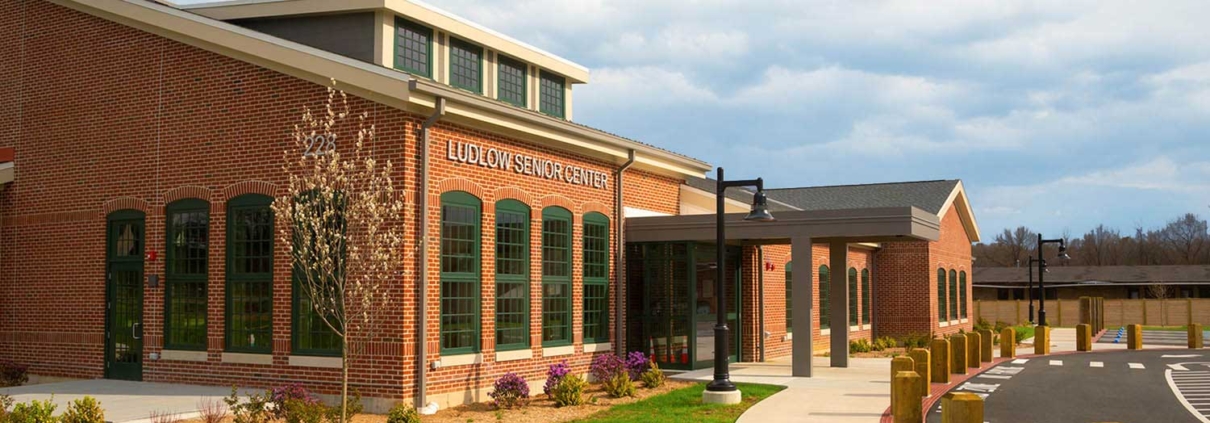
Westmass bought the property in 2011 and its other improvements include the River Walk along the Chicopee River, a senior center, a rehab facility, refurbished light industrial space and leaseholder Iron Duke Brewing. Daley said ground-floor space in the complex is 80% to 90% percent leased. Work is nearly complete on Riverside Drive, a new road in part of the complex.

In November at an event in Gardner, MassDevelopment announced a different grant for Ludlow Mills. Westmass Development Corp. got $250,000 to improve the historic stockhouses — approximately 22 one-story, 6,000-square-foot warehouses that now house small manufacturers, entrepreneurial startups and other businesses.

On Tuesday, MassDevelopment announced a total of nine other site readiness grants totaling $2.8 million.

The only other one in Western Massachusetts was $600,000 to design and plan for the possible redevelopment of the International Paper Mill on 50 acres on the Millers River in Erving. The town of Erving, which owns the property, plans to demolish five sub-buildings to eliminate safety hazards, making the property more attractive for redevelopment and creating space for a proposed access road. Site readiness funds will support planning work to better position the property for redevelopment and partially fund the demolition work contingent upon the town securing additional funding, MassDevelopment said.

Please see MassLive for the original article.

Baker-Polito Administration Announces $250,000 Underutilized Property Program Award for the Ludlow Mills

On November 30th, the Baker-Polito Administration and MassDevelopment announced the first-ever awards made through the Underutilized Properties Program, which along with MassWorks is now part of the Community One Stop for Growth platform. The Underutilized Properties Program was created through the Economic Development Legislation signed into law by Governor Charlie Baker in January 2021. The program targets underutilized, abandoned, or vacant properties by supporting efforts that eliminate blight, increase housing production, support economic development projects, or increase the number of commercial buildings accessible to individuals with disabilities.

In its first year, the program is funding 20 projects, totaling $7,516,000 in awards. Included among the 20 awards, Westmass received $250,000 for capital improvements to the historic stockhouses within the Ludlow Mills. The stockhouses include approximately 22 one-story, 6,000-square-foot buildings that house small manufacturing businesses, entrepreneurial startups, and other unique entities; the critical capital improvements funded by this grant will make 10 of these buildings more viable for existing and future tenants.

“This inaugural round of grants will breathe life into 20 underused buildings,” said MassDevelopment President and CEO Dan Rivera. “The Underutilized Properties Program is making a difference in downtowns and town centers across Massachusetts. This $7.5 million in awards will fund capital improvements and predevelopment work to increase occupancy in challenging properties, creating new opportunities for housing, retail, and further economic development.”

Full press release available here.

Westfield Data-Center Project Makes a Hard Push for the Finish Line

BusinessWest (September 29, 2021)

Putting the Pieces Together

It’s called a ‘hyper-scale data center.’ That’s the name attached to a $2.7 billion proposal planned for a 155-acre parcel in Westfield. The complicated project, now entering the local-approval phase, has cleared perhaps the biggest hurdle — the aggregation of a site that can check a unique set of boxes, including accessibility to huge amounts of power and data. If it comes to fruition — and there are still many challenges to overcome — the project could make the region a player in the emerging sector known as Big Data.

Demetrios Panteleakis says he spent a good part of the winter, spring, and some of the summer walking through all 150 acres of mostly raw land in the northwest corner of Westfield.

“I probably know every inch of it by now,” Panteleakis, the principal commercial broker with Springfield-based Macmillan Group, who was charged with assembling the parcel, told BusinessWest, adding that he’s been through it in every type of weather imaginable. “I think my family thought I had gotten into hiking and the outdoors.”

These walks in the woods — and wetlands — were a necessary part of a complicated process to aggregate land for what could be the largest private development the region has ever seen and one of the largest initiatives of its kind anywhere — a $2.7 billion proposal to build a massive data center (a ‘hyper-scale data center,’ as it’s called) that will attract the likes of Amazon, Google, and Facebook.

Plans call for constructing 10 buildings totaling 2.7 million square feet over the next 12 to 18 years, said Erik Bartone, CEO of Servistar Realty, the project’s developer. He told BusinessWest he hopes to obtain local approvals by the end of the year and state approvals by mid-2022, and break ground in 2023.

It’s a daring project, one that comes complete with all kinds of large numbers and adjectives (like hyper-scale) that connote size and scope affixed to everything from acreage to the projected cost of the initiative to the number of landowners with which Panteleakis and the Servistar had to negotiate.

That last number would be 11, just one indicator of the level of complexity involved with getting just this far, said Panteleakis, adding that finding a location and assembling the land are perhaps the biggest hurdle for a project that will face many of them — everything from required approvals for a tax-incentive plan to steps to protect endangered species, such as the eastern box turtle.

As for securing a site … a project of this nature and scope requires that a number of unique boxes be checked, said Panteleakis. These include the ability to draw power, and large amounts of it, straight from the grid — two recently upgraded 115 kV high-transmission lines run through the center of the site — as well as access to a reliable, high-speed fiber communications network. Competitive cost of doing business is also high on the list, as is a skilled workforce and easy access to major markets.

“Finding the right location in New England for a hyper-scale data-center development is difficult.”

When all is said and done, it certainly isn’t easy to find a parcel — or parcels that can be aggregated — that can check all those boxes.

“Finding the right location in New England for a hyper-scale data-center development is difficult,” Bartone said. “Access to the electric transmission grid, robust fiber communication network, sufficient land, and the ability to develop the project in an environmentally responsible manner are all very important issues that must be fully evaluated before proceeding with a particular location.”

As noted, the proposal still has many hurdles to clear, but it’s not too early to speculate on what this could mean for the city and the region.

Rick Sullivan, who can speak about the project from a number of perspectives — he’s president and CEO of the Western Mass. Economic Development Council, but also former mayor of Westfield and a current city councilor — said it represents an opportunity to show what the region can do for the emerging sector known as Big Data — and perhaps do more of.

Rick Sullivan says the Westfield data-center project, if it becomes reality, could open the door to new opportunities in the realm known as Big Data.

“This is somewhat of a new sector for us, so I think there’s an opportunity to get attention,” he explained. “Sometimes, getting that first development in a sector is the hardest thing, and then, once that happens, the others do take notice.”

Jeff Daley, president and CEO of WestMass Area Development Corp., which has been hired as a consultant on the Westfield project, agreed.

“It’s an exciting project — this is a game changer,” he said. “If we get this project across the goal line, it opens up an entire industry; we would have the potential to bring other data centers here.”

As for Panteleakis, the data-center project represents another bullet point on a résumé complete with a number of big projects with complicated logistics, something he’s becoming known for within the development industry.

Indeed, when he was not walking the Westfield property and negotiating with all those owners, he was flying to Miami to put the final touches on a massive, $1 billion project that combines residential living with transportation, retail, and office space.

“This is somewhat of a new sector for us, so I think there’s an opportunity to get attention. Sometimes, getting that first development in a sector is the hardest thing, and then, once that happens, the others do take notice.”

The two projects offered a number of different challenges, with COVID presenting new and different issues to contend with, he said, adding that they epitomize what has come to be one of his trademark talents — putting the many pieces together on complicated real-estate puzzles.

For this issue, BusinessWest takes an in-depth look at how this complicated Westfield project came together and how this initiative could change the landscape — in all kinds of ways.

Big Bytes

Panteleakis told BusinessWest that, on many of his flights to and from Florida, he didn’t have much company on the airplane.

“I was on a 747 out of Boston — because you couldn’t fly out of Bradley to Florida — that had two other people on it,” he said. “It was weird. Logan was a ghost town, Miami International was a ghost town; it was very strange.”

That was how things were as he was working on two massive projects on opposite ends of the Atlantic seaboard.

The Miami initiative was a complicated matter of putting the pieces together for a project called Virgin MiamiCentral, a nine-acre living center in the heart of the city that includes 3 million square feet of commercial, office, and retail space, capped with twin residential towers, each more than 40 stories high, sitting atop a train station and retail hub.

Jeff Daley says the data-center project could be a game changer for the region.

Meanwhile, what is now known as the Westfield data-center campus became a very complicated matter of aggregating property that could meet all those unique requirements listed earlier.

In most all cases, the land required for such projects doesn’t come in one parcel, but several of them, which means negotiations on acquiring options — as in quiet negotiations — have to take place with a number of parties simultaneously.

Panteleakis, who compared it to cutting the Gordian knot, tried to put it in perspective for BusinessWest.

“We worked with about four or five different brokers in Western Mass. who represented some of the 11 owners, which at times made things easier, but a predominance of the owners self-represented,” he explained. “And that included people who had ongoing businesses, and it was very arduous and long and, of course, highly confidential.

“It was heavy lifting,” he went on, “and to see it at this stage is very gratifying.”

Overall, it took roughly 14 months to put the parcel in place to the point where the developer could move forward, he said, adding that the site, while challenged by wetlands and environmental issues, provides the size, location, and direct access to the grid needed by Servistar and its eventual clients.

“There’s currently nothing of this scale in the region due primarily to very high retail electricity costs, high property taxes, and significant regulatory challenges.”

The company has a considerable amount of experience with such projects, said Bartone, adding that Servistar has been in the electricity-procurement and energy- management business for 30 years, supporting large-scale commercial and industrial clients, including data and IT service clients.

“Our firm has provided advisory services to several data-center clients, including the management and procurement of their wholesale electricity requirements,” he told BusinessWest, adding that the company currently represents a hyper-scale data-center client that is looking to enter the New England market once local approvals are obtained for the Westfield project.

Elaborating, he said there are several smaller-edge data centers in New England, including in the Boston area, but there are currently no hyper-scale data centers in New England, and for several reasons.

“There’s currently nothing of this scale in the region due primarily to very high retail electricity costs, high property taxes, and significant regulatory challenges,” he explained. “Our firm specializes in the wholesale electricity-procurement markets along with the integration of innovative load-management strategies to proactively reduce the electricity costs for data centers and large power users.

“This is a key cost driver for the industry and critical to making the hyper-scale data-center project feasible,” he went on. “Electricity expenditures typically represent 50% to 60% of the operating costs of a data center. Property taxes typically represent 10% to 15% of operating expenses. These two operating cost components, along with local regulatory approvals, are the primary drivers to locate hyper-scale data centers to New England.”

Bartone said Servistar reviewed numerous sites in Connecticut, Rhode Island, and Massachusetts before focusing on Westfield, a community that emerged in this search roughly 18 months ago.

“We identified various parcels in the city’s industrial zones that met the requirements for the site, but the area is challenging to develop due to wetlands and endangered species, including the eastern box turtle,” he noted. “So we needed a substantial amount of land that would support the 10 data-center building development while also allowing us to minimize environmental impacts.”

Beyond meeting the energy, fiber, and property-tax requirements, the site is also centrally located between Boston, New York City, Providence, Albany, and Hartford, said Bartone, thus providing access to more than 34 million people in the Greater New York metropolitan area and New England. It is also in close proximity to the Westfield-Barnes regional airport with corporate service, only 20 miles from Bradley International Airport, and approximately 100 miles from Logan International Airport.

“Boston also has a high-tech, information-based economy that is an attractive market for corporate offices of companies locating to Westfield for their IT services,” he said, adding that this concentration of trained tech workers was still another selling point.

Powerful Statement

As he talked about the project and its prospects for becoming reality, Sullivan turned to the often-used analogy of getting over the goal line.

He said this project isn’t in the proverbial red zone yet, but it is certainly past midfield and making steady progress.

“There’s still a long way to go, but once they have options on the property and they’re doing work around wetlands and having discussions with the electricity suppliers, you’re past midfield, but you’re not home yet,” he explained. “I don’t think you can have a higher, better use of that property.”

Daley said the next important step is approval of what’s known as a 121A, or PILOT (payment in lieu of taxes) property-tax agreement that locks in the assessed value of the property, with built-in annual increases in property-tax payments. Westfield officials have said the project would bring in $1.2 million in tax payments within three years, making the campus the largest taxpayer in the city.

A joint public hearing between the Planning Board and City Council on the proposed agreement is slated for early October, said Daley, adding that there are other approvals, on both the local and state levels, that must be secured in the coming months.

“We’re hoping to have all local permits in hand by the end of the year,” he explained. “Shortly thereafter, we’d begin work on designs and infrastructure; it would be about 18 to 24 months from go date to being operational.”

Meanwhile, speculation continues about what this project could mean for Westfield and the region. That discussion takes place on many levels, starting with immediate, tangible benefits.

That list includes 1,800 construction jobs, 1,200 indirect jobs that will result from creation of the center, and what is projected to be 400 jobs that will pay between $85,000 to $100,000 at the entry level.

“When people in economic development talk about job creation, these are the kinds of jobs that you’re looking to create,” Sullivan said. “These employees will live in our communities, they’ll invest in our communities, they’ll shop in our communities, and they’ll support the charities in our communities, as will the companies.”

There’s also the tax revenue; Servistar has negotiated a 40-year property-tax agreement with the city that is expected to produce more than $350 million in direct property-tax payments over the term of that agreement.

Beyond these direct benefits, though, is that opportunity Sullivan and Daley mentioned for the region to not only get in the game when it comes to Big Data, but become a player in that sector, which would appear to have almost unlimited potential.

“If you look in the crystal ball, this is a sector that’s only going to grow,” Sullivan said. “And of you overlay data storage and data transmission and all the issues that are somewhat related, such as cybersecurity and other Big Data, I think there’s a real opportunity for us in Western Massachusetts to grow and in some ways lead, if you will, in this sector.

“We have out colleges, especially Bay Path and the University of Massachusetts, that are doing a lot of cutting-edge work in cybersecurity and Big Data, and others will certainly follow,” he went on. “And this will help train a workforce, which is always significant as these companies look to grow.”

As for some of those other boxes that need to be checked, Sullivan acknowledged that the cost of doing business in this state is not as low as in some other areas of the Northeast, but Western Mass. is certainly more cost-friendly that Boston and other metropolitan areas. “Developing in New England may not be the cheapest, but we’re still competitive.”

Bottom Line

Panteleakis — who, as noted, has been involved in large development projects in many areas of the country — said the Westfield data-center campus project represents the type of development that all regions are striving for.

“I’ve done a lot of work in Florida and Texas, and this is how they drive economic development for the 21st century in their areas; they’re focusing on new sectors and technologies,” he explained. “This project will have a tremendous impact on quality of life in Westfield and across the region. It will have a very broad impact.”

As those we spoke with noted, there are still many hurdles to overcome before this proposal becomes reality. If it can clear those obstacles, it could be transformative in many different ways.

Original article available here.

Sarah la Cour, Westmass VP of Operations | New England Real Estate Journal 2021 Women in Commercial Real Estate Spotlight

New England Real Estate Journal (September 24, 2021)

What led you to your current profession?

My professional path through landscape architecture, historic preservation and economic development has allowed me to evolve my career into the field of real estate development. The experience and skill set that I’ve acquired has provided me the opportunity to now enjoy the multiple projects and responsibilities associated with brownfield redevelopment, real estate development, economic and community
development.

In the past year, what project, transaction or accomplishment are you the most proud of?

This year, Westmass was awarded a $460,000 2021 EPA Brownfield Cleanup grant
for one of our properties, The Ludlow Mills, to continue the process of remediation in historic mill buildings. I’m proud of the fact that the Westmass team worked together to successfully secure these funds and continue our redevelopment activities to advance the rejuvenation of this remarkable historic mill complex.

What is one characteristic that you believe every woman in commercial real estate should possess?

A sense of humor. Throughout my life and career, it has been helpful for me to always try to look at things with humor. Whether at a particular situation and at myself, I’ve found that being able to find a way to laugh can de-escalate a conflict or solve a problem with grace and confidence. Sharing a laugh with a colleague or client also helps create a positive and cheerful atmosphere to accomplish great work in.

Original article available here (p.51)